
Tuesday, March 17th, 2026
Diversifying the Fleet to Support Modern Jobsites
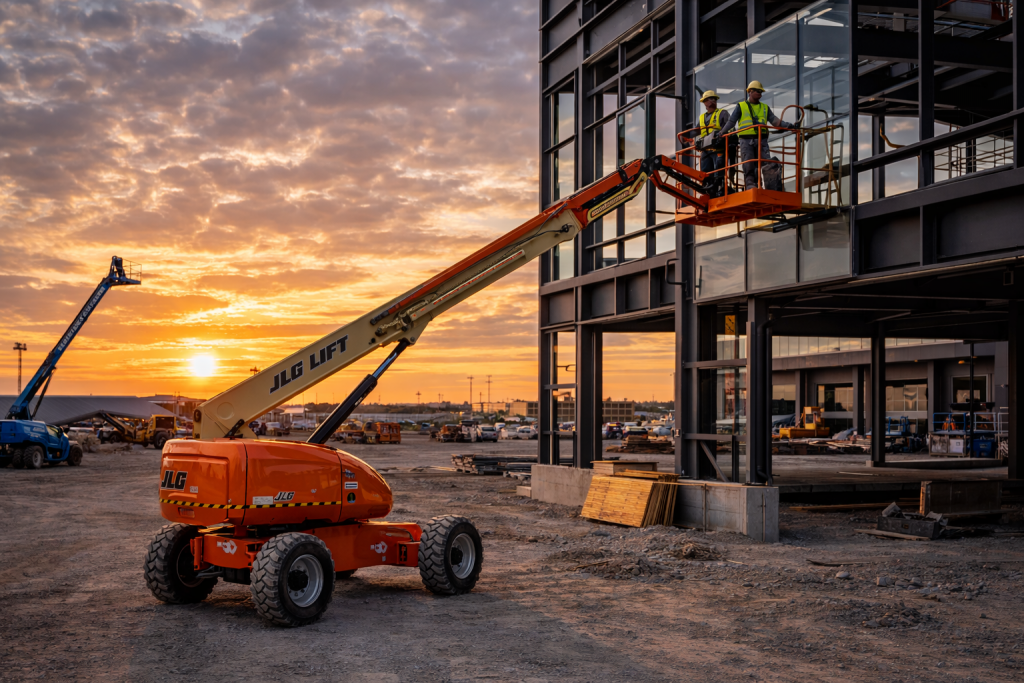
More than 52% of contractors in North America now rely on rental fleets to offset the costs and constraints of owned equipment. For anyone managing procurement, overseeing project budgets, or coordinating a jobsite, the breadth and readiness of a rental fleet are factors that directly impact your schedule and productivity.
Projects today leave little room for error. Equipment either supports the plan or disrupts it.
Why Equipment Diversity Matters
Modern projects like high rises, commercial builds, and industrial warehouses require a range of equipment and sometimes more than the standard lift. Larger glazing systems, heavier materials, and tight urban footprints demand precise handling and specialty equipment that can be traditionally hard to source.
A diversified rental fleet gives contractors access to a broader range of machines and attachments, like warehouse forklifts, glazing kits, and Jakko units to execute the full scope of their lifting requirements.
It also improves utilization. Contractors should be able to match the right machine to each job instead of forcing an approach or halting work. This protects ROI on expensive equipment and prevents downtime that can cascade across the schedule.
Reducing Bottlenecks on Larger Projects
Availability and coordination are often bigger headaches than price. When a provider cannot cover enough of the scope, projects fragment across multiple suppliers and each handoff introduces risk. Access to a broad rental fleet allows teams to handle more of the project scope through a single source. If you have ever re-sequenced trades because a specialty unit was unavailable, you know how quickly delays compound.
Opening Access to New Project Types
If you haven’t worked with CanLift before, it may be because you didn’t realize the range of equipment available. Others are expanding into new sectors and assume they need a different rental partner to support that growth. Our diversified fleet changes that equation, opening up access to industrial, infrastructure, and large commercial construction sectors that require specialized equipment.
Reliability remains the priority. We have expanded technician training and OEM certifications, upgraded diagnostic capability, and strengthened parts inventory planning to ensure these machines perform as expected. Equipment is not a convenience on these projects. It is part of the production schedule.
The Value to Your Projects
Fleet strategy is about matching equipment to how projects are built today. In Canada alone, the construction equipment rental market is forecast to reach $6.7 billion in 2026.
At the same time, tariffs, supply chain pressure, and economic uncertainty remain part of the operating environment. Access to diverse equipment types and manufacturers reduces exposure to shortages and delays. It allows teams to adapt quickly when market conditions shift. You can bid and deliver on jobs that require specialty lifts or attachments without investing in owning, storing, and maintaining them yourself.
For upcoming work, where are the equipment pressure points in your scope? Are specialty units difficult to source? Are multiple providers being relied on to complete what could be handled through a single supplier with a diversified fleet? Those are the conversations worth having.
Review our equipment inventory or contact our team for a rental quote and scope discussion. Let’s make sure your next project is supported by the right equipment from day one.